
Tunnel Mountain Hike: Summit Views and the Best Stops Near Banff

Rising directly above Banff, Tunnel Mountain delivers a surprisingly rewarding mountain experience without requiring a full day or a long drive. Forested switchbacks lead to broad views over the Bow Valley, Mount Rundle and the Banff townsite, making this one of the most accessible summit hikes in the national park.
Suggested Tunnel Mountain hiking route

The classic route is an out-and-back hike from the signed lower or upper trailhead to the summit. Plan for roughly 4.5 kilometres return, about 275 metres of elevation gain and close to two hours on the trail. The lower trailhead is about one kilometre from downtown Banff; parking at both trailheads is limited, so walking from town can be the simplest start.
The route map below shows the recommended path and how the trail sits between downtown Banff and the viewpoints above the Bow Valley.
Why hike Tunnel Mountain?
Tunnel Mountain is short enough to fit into a half day, yet the views feel distinctly alpine. The trail gains height steadily through lodgepole pine forest, then opens to natural viewpoints above the town and river. It is a strong choice for first-time Banff visitors, families accustomed to uphill walking and anyone looking for a satisfying summit without committing to a remote backcountry outing.
The highlights below are grouped into three tiers, so you can enjoy the essential hike first and add nearby places if time, weather and energy allow.
⭐ Must-see Tunnel Mountain highlights
Tunnel Mountain summit
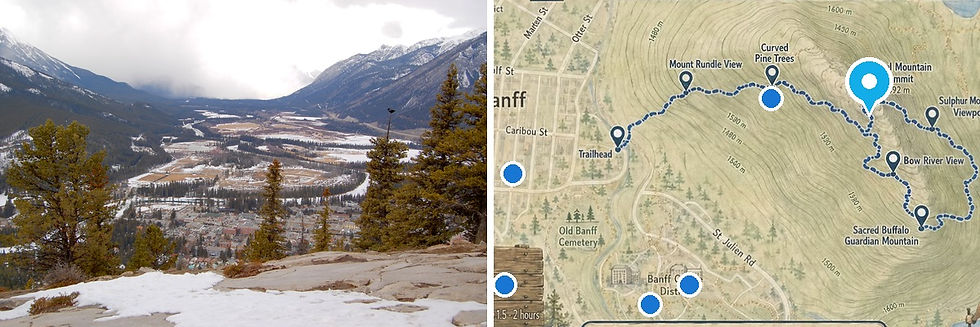
Route position: The turnaround point at the top of the main trail. Allow: 15–30 minutes at the summit. Best for: Bow Valley views, photographs and the satisfaction of reaching the top.
The summit area opens toward the Banff townsite, the Bow River and surrounding peaks. Give yourself time to explore only the designated viewpoints and enjoy how dramatically the landscape changes from the forested lower trail.
Upper-trail viewpoints

Route position: Along the final section below the summit. Allow: 10–20 minutes. Best for: Mount Rundle, valley views and quieter photo stops.
These openings in the forest provide some of the trail’s best perspectives even before you reach the summit. They are especially useful if changing weather or trail conditions make a full summit visit less comfortable.
👍 Recommended stops near the trail
Surprise Corner
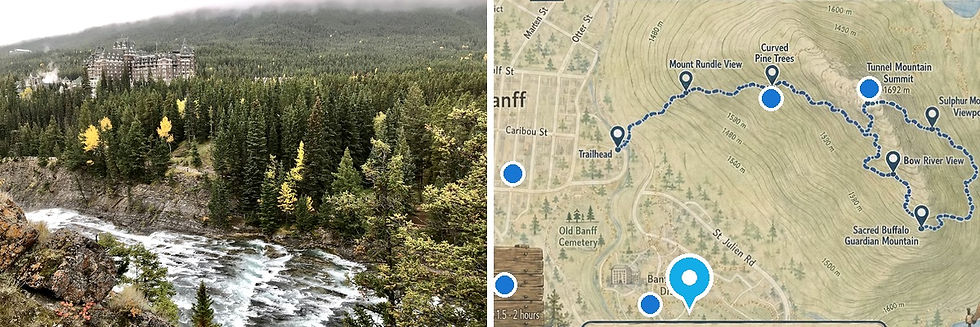
Route position: A short detour east of downtown near Buffalo Street and Tunnel Mountain Road. Allow: 15–30 minutes. Best for: The classic view across the Bow River toward the Fairmont Banff Springs.
This roadside viewpoint is one of Banff’s most recognizable scenes and pairs naturally with Tunnel Mountain because it sits on the same side of town. It is free to visit; parking is limited.
Banff Park Museum National Historic Site

Route position: About one kilometre from the lower trailhead at 91 Banff Avenue. Allow: 30–60 minutes. Best for: Natural history, heritage architecture and an indoor stop.
The 1903 log building houses a historic natural-history collection and adds context to the landscapes and wildlife you see on the trail. Opening days and admission vary by season.
🕒 If you have more time
Bow Falls
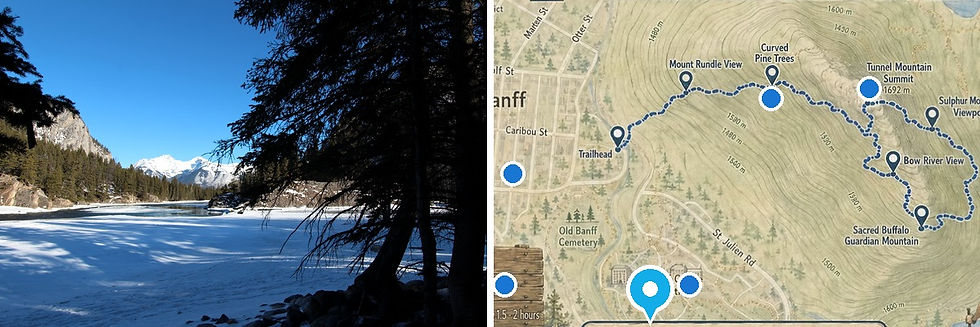
Route position: A short detour south of downtown, below the Banff Springs Hotel. Allow: 30–45 minutes. Best for: River scenery and an easy finish after the hike.
The broad falls sit where the Bow River bends below the hotel. A riverside path links the area with downtown, although seasonal closures may affect the clifftop section in winter.
Cave and Basin National Historic Site
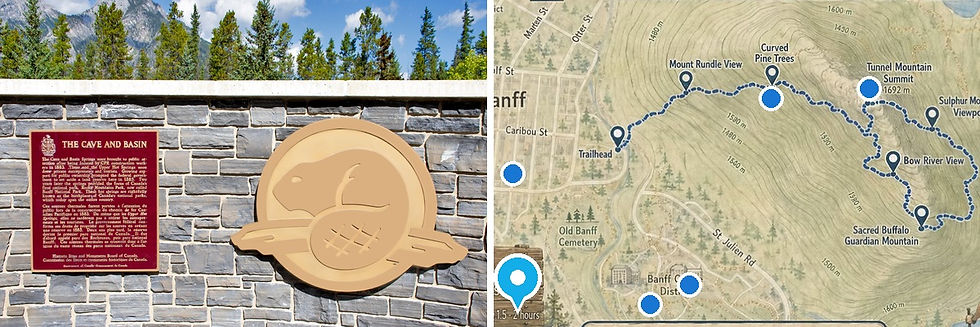
Route position: Roughly three kilometres west of the lower trailhead at 311 Cave Avenue. Allow: 60–90 minutes. Best for: Hot-spring history and the origins of Canada’s national parks.
Exhibits, boardwalks and the historic bathing pavilion explain why this small thermal-spring site became central to the creation of Banff National Park. Check seasonal hours and admission before visiting.
Build your ideal Tunnel Mountain day
Classic hike: Follow the trail to the summit, enjoy the viewpoints and return to Banff.
Best views: Add Surprise Corner after the hike.
History and context: Visit the Banff Park Museum or Cave and Basin.
Easy riverside finish: Walk or drive to Bow Falls.
When to hike Tunnel Mountain
Summer and early fall usually provide the easiest footing, but conditions can change quickly. In shoulder season and winter, packed snow and ice are common; traction cleats and hiking poles can make the descent much more comfortable. Always check the current Parks Canada trail report and local weather before setting out, stay on designated trails and carry water, layers and bear spray.
Hear the stories on the trail
If you would like a little more context as you walk, Tripvia’s GPS-guided Tunnel Mountain audio tour shares stories about the landscape, wildlife and viewpoints while you follow the route at your own pace.


The point about the upper-trail viewpoints being useful when weather or conditions make a summit visit less comfortable stood out to me. Since the trail is mostly forested until those openings, how reliable are the views there compared with the summit itself? I wonder whether the exposure and footing on the final section change enough that turning around early still feels worthwhile, or if the summit is really the only payoff.
Related resource: https://animebreaker.org/